 TVLBAI Collaboration
TVLBAI Collaboration
The Terrestrial Very-Long-Baseline Atom Interferometry (TVLBAI) collaboration is an international initiative developing kilometre-scale atom interferometers for fundamental physics research, planned for operation in the mid-2030s.
Latest News
Find-a-researcher
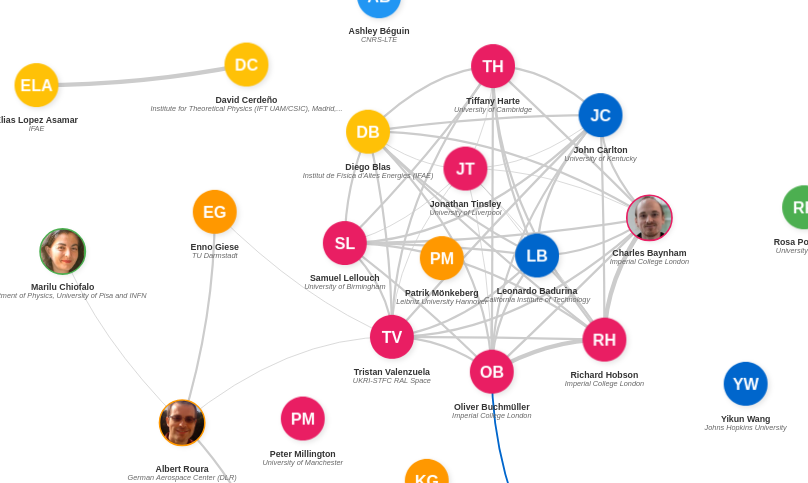
Our new interactive graph of TVLBAI researchers is now live! Explore our network of collaborators and their research interests. If you'd like to be on it, please click the link. Learn more →
Canfranc Workshop Underway
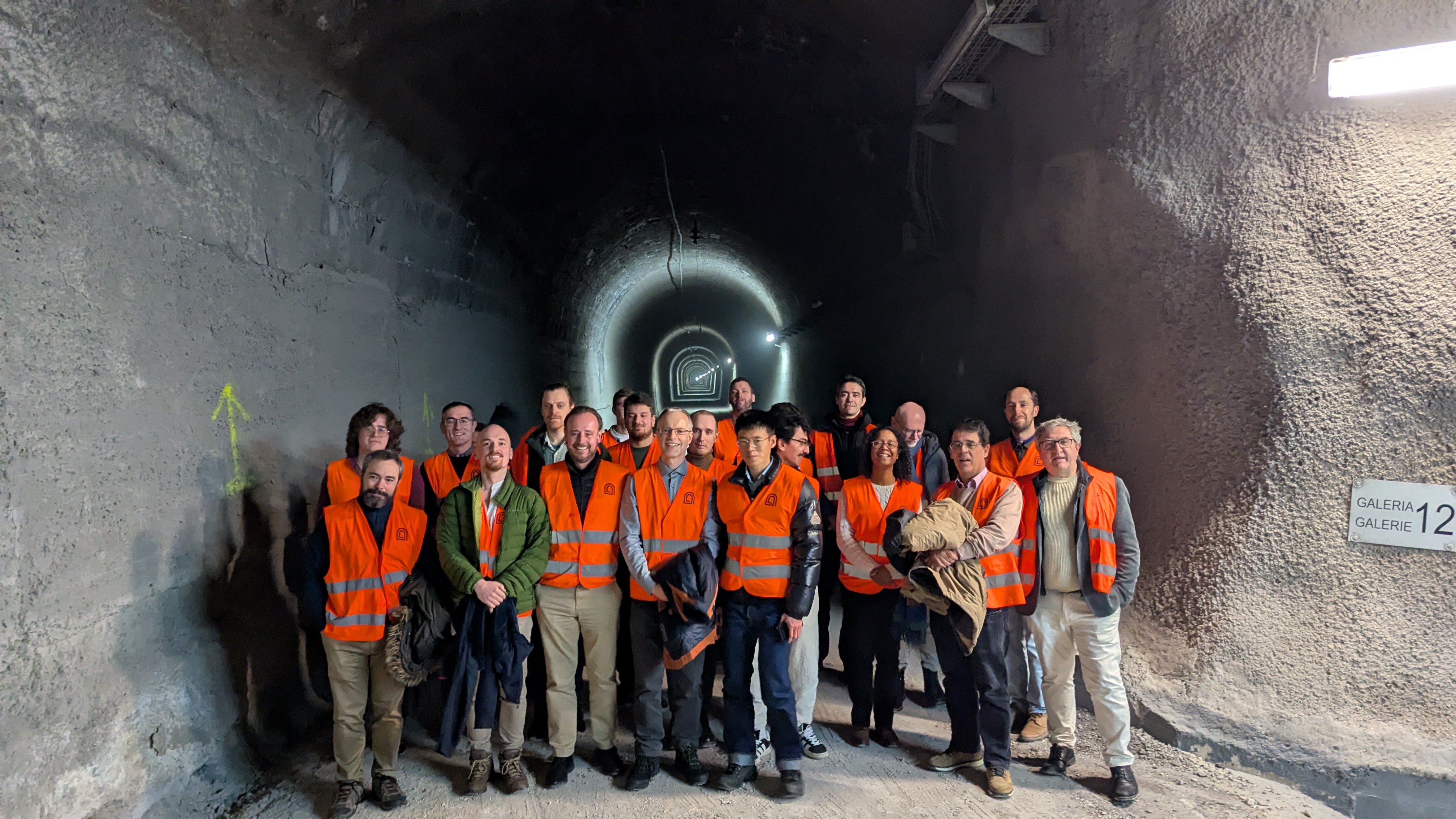
The TVLBAI collaboration is meeting at the Canfranc Underground Laboratory in Spain for our fourth annual workshop, discussing progress on prototype experiments and planning future collaborations. Learn more →
Successful Hannover Workshop
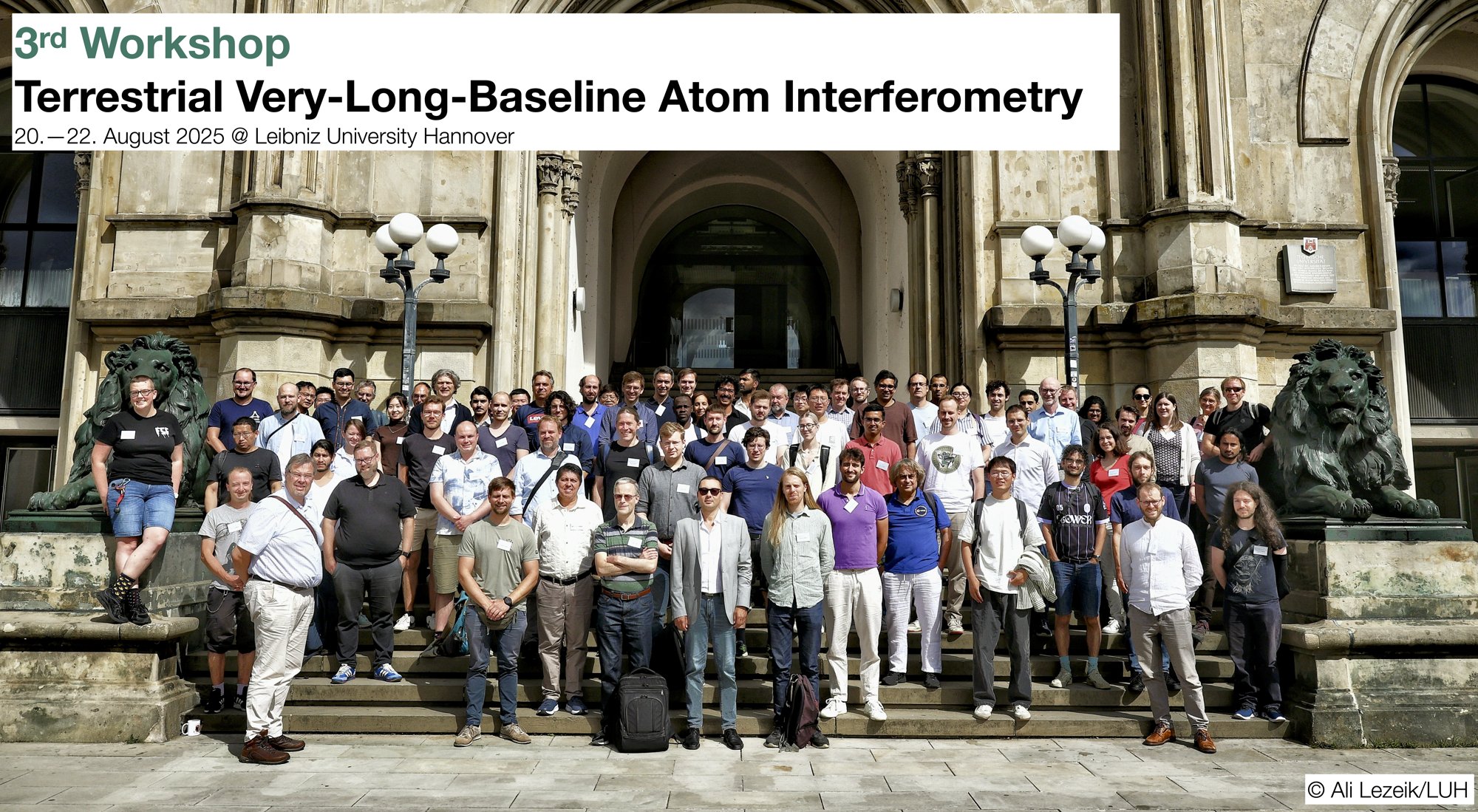
Over 80 participants from around the world gathered at Leibniz University Hannover for three days of scientific presentations and collaborative discussions. Learn more →
Collaboration Formalized
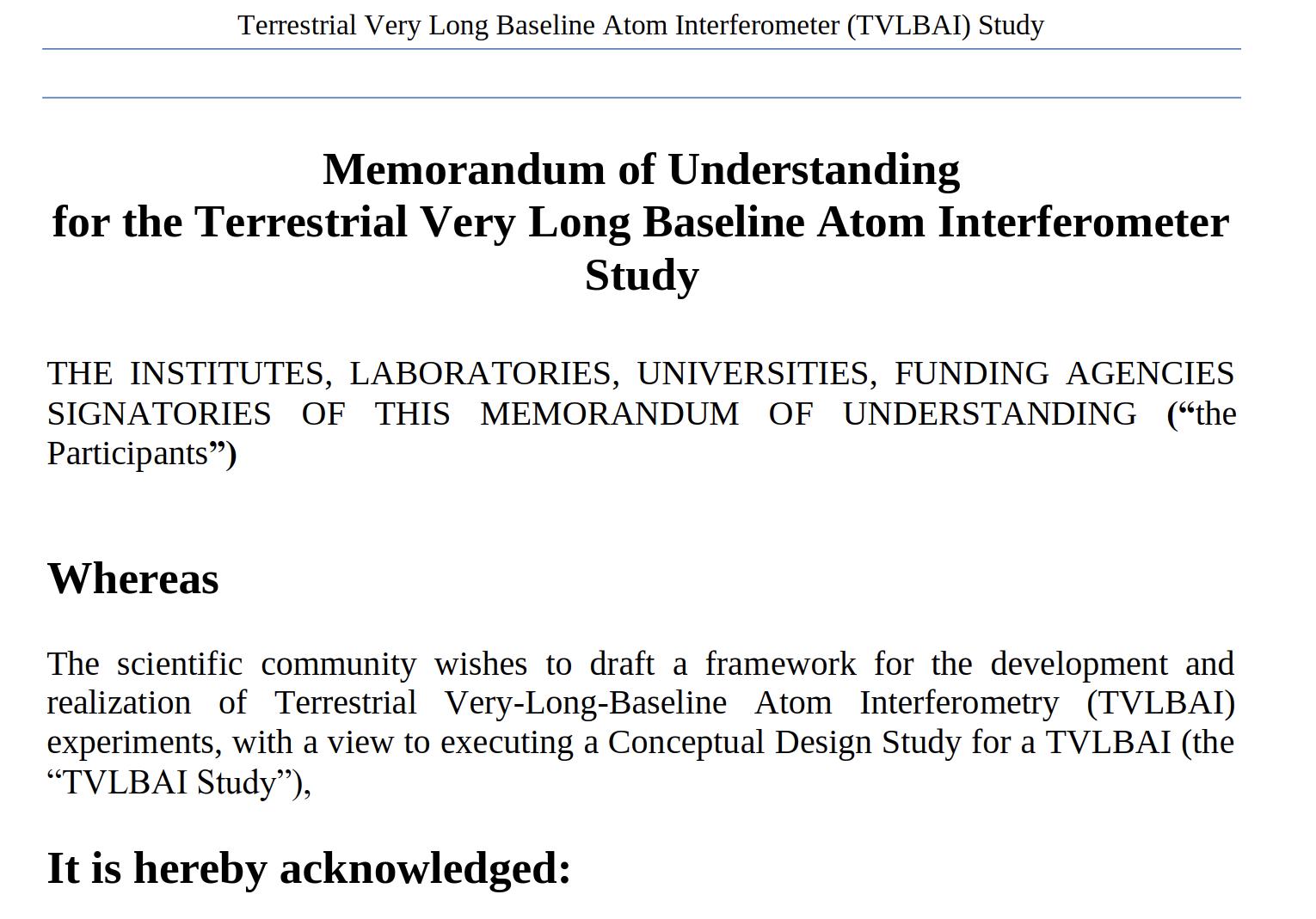
More than 50 institutions worldwide have signed the TVLBAI Memorandum of Understanding, establishing the formal structure of our collaboration. Learn more →
Our Mission
We are building the next generation of precision measurement instruments using cold atoms. Our detectors will search for:
- Ultralight dark matter — probing variations in fundamental constants
- Gravitational waves in the deci-Hertz band — filling the gap between LIGO and LISA
- New physics beyond the Standard Model — testing fundamental symmetries
About the Collaboration
The TVLBAI proto-collaboration was established in 2023 and formalized in 2024 with a Memorandum of Understanding signed by over 50 institutions worldwide. We bring together experts from cold atom physics, astrophysics, cosmology, and high-energy physics.
Our annual workshops have been held at:
- CERN, Geneva (March 2023)
- Imperial College London (April 2024)
- Leibniz University Hannover (August 2025)
- Canfranc Underground Laboratory, Spain (February 2026)
Key Projects
Several prototype detectors are already under development:
| Project | Location | Scale |
|---|---|---|
| AION | UK | 10m → 100m → km |
| MAGIS-100 | Fermilab, USA | 100m |
| MIGA | LSBB, France | 150m |
| VLBAI | Hannover, Germany | 10m |
| ZAIGA | Wuhan, China | 240m → km-scale |
Get Involved
We welcome new collaborators from institutions worldwide. See our Members page for current participants or Contact us to discuss joining the collaboration.